

Enclosure Bed
$0.00
Description
PREVENTING PATIENT FALLS IN HOSPITALS: COSTS, CONSEQUENCES, AND INNOVATIONS
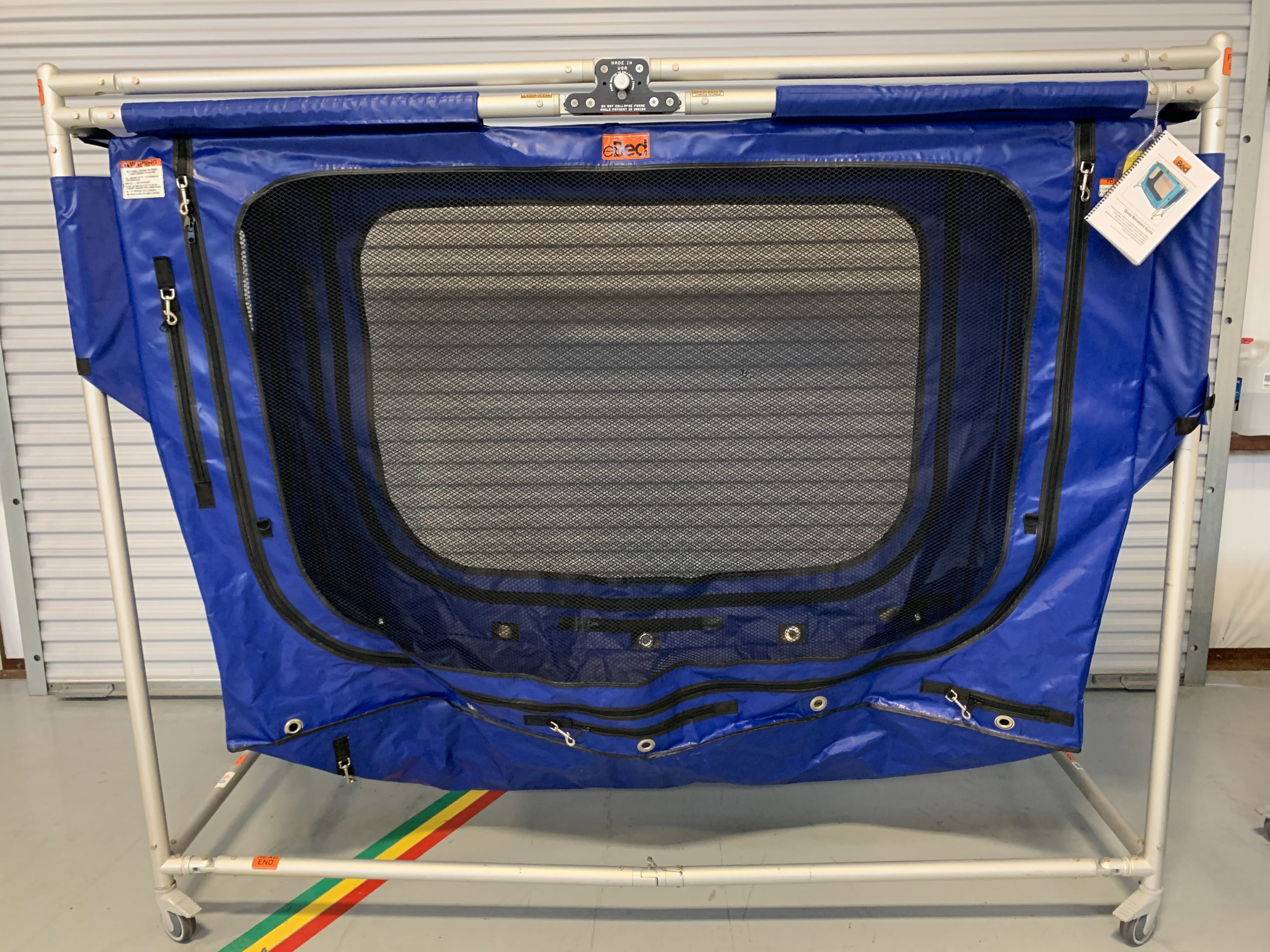
Patient falls remain a persistent challenge in acute care hospitals across the United States, resulting in significant patient harm and substantial financial costs. Despite advancements in clinical practice, technology, and innovation, falls continue to be a leading cause of preventable injury. eBed is a new solution to a very costly problem.
Every year, between 700,000 and 1,000,000 hospitalized patients experience a fall, with approximately one-third of these incidents deemed preventable (AHRQ, 2025). The risk is exacerbated by factors inherent to the hospital setting—illness, unfamiliar environments, medications, treatments, and reduced physical activity, all of which can contribute to confusion, weakness, and instability. Notably, even patients who are typically active and independent may become vulnerable to falls during hospitalization.
Preventing patient falls in hospitals remains both a clinical and financial imperative. While traditional approaches such as sitters continue to consume substantial resources, their impact on fall rates is questionable. The path forward lies in the adoption of innovative, evidence-based strategies that harness technology, empower clinical teams, and center the needs of patients. By focusing on continuous improvement and leveraging new tools and approaches, hospitals can reduce the incidence of falls, minimize non-reimbursable expenses, and achieve better outcomes for patients and staff alike.
Citation and Relevant Section
Source: A Guide for Modifying Bed Systems and Using Accessories to Reduce the Risk of Entrapment. Food and Drug Administration (FDA), Hospital Bed Safety Workgroup (HBSW). Published: March 10, 2006 (updated June 21, 2019). Available at: [https://www.fda.gov/regulatory-information/search-fda-guidance-documents/guide-modifying-bed-systems-and-using-accessories-reduce-risk-entrapment snipped due to length]cacmap.fda.gov
Relevant Section: Attachment D: Accessories to Mitigate Entrapment Areas
Key Excerpt:
“Net Enclosures, made of fabric or net which completely enclose an area over the bed and prevent a patient from being able to exit the bed in any direction. In special circumstances and based on clinical assessment, net enclosures may be used to prevent bed exit. Most of these devices could potentially mitigate entrapment in Zones 1, 2, and 4, however, without proper mattress edge and bed rail gap controls, Zone 3 entrapment mitigation might not be provided.”
Explanation:
- The HBSW identifies seven potential entrapment zones in hospital beds, with Zones 1–4 being the most common for entrapments and deaths (Zone 1: within the rail; Zone 2: under the rail, between supports; Zone 3: between the rail and mattress; Zone 4: under the rail at the end of the rail). These zones represent gaps where a patient’s head, neck, or chest could become trapped, leading to injury or asphyxiation.
- The document specifies that net enclosures, like the eBed Enclosure System, are effective in mitigating entrapment risks in Zones 1, 2, and 4 by fully enclosing the bed, preventing patients from accessing these gaps. However, Zone 3 (the space between the rail and mattress) may still pose a risk if mattress edges or rail gaps are not properly managed (e.g., ensuring a properly fitted mattress).
- Context for TBI Patients: Brain injury patients, particularly those with severe TBI (e.g., Glasgow Coma Scale [GCS] scores of 3–8), often exhibit agitation or confusion (e.g., Richmond Agitation-Sedation Scale [RASS] scores of +1 to +4), increasing their risk of entrapment or falls. The eBed’s net enclosure prevents patients from exiting the bed, reducing these risks while allowing safe monitoring and care.
Related products
-

Air+Care LALAP Therapy System
$0.00 Get A Quote This product has multiple variants. The options may be chosen on the product page -
Ultra Convertible Hybrid foam mattress
$0.00 Get A Quote This product has multiple variants. The options may be chosen on the product page -
Movao Bari
$0.00 Get A Quote This product has multiple variants. The options may be chosen on the product page -

ImmersaTurn CLR Therapy System
$0.00 Get A Quote This product has multiple variants. The options may be chosen on the product page